Why an MRI is Critical Before Non-Surgical Spinal Decompression
The Essential First Step for Safe and Effective Disc Treatment
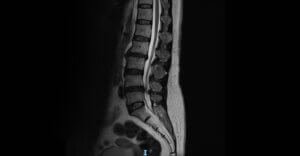
Lumbar spine MRI revealing a herniated disc compressing a spinal nerve. MRI imaging is essential before beginning spinal decompression therapy.
Introduction
If you are considering non-surgical spinal decompression, one of the most important steps before beginning treatment is obtaining a spinal MRI.
At Disc Centers of America – Henderson, we require an MRI before beginning treatment using our Swolensky Method of Disc Rejuvenation™. This step is critical because it allows us to see the exact condition of the spinal discs, nerves, and surrounding structures.
Without advanced imaging, it is impossible to determine the true cause of many spinal problems.
An MRI ensures that decompression therapy is:
-
Safe
-
Appropriate
-
Targeted to the correct disc level
-
More likely to produce lasting results
What an MRI Reveals That X-Rays Cannot
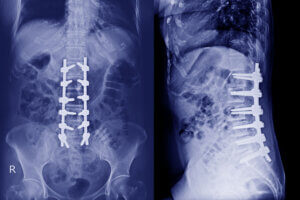
X-ray Lumbar spine AP,Lateral : A human and postoperative treatment for degenerative lumbar disc disease by decompression and fix by iron rod and screws.Blue tone.
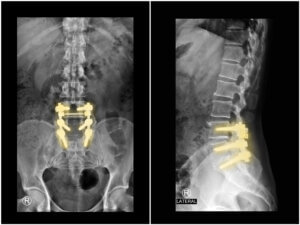
Comparing treatment options after failed back surgery.
Traditional X-rays only show bones. They cannot show the soft tissues that are often responsible for back pain.
An MRI (Magnetic Resonance Imaging) provides detailed images of:
• Herniated discs
• Bulging discs
• Degenerative disc disease
• Nerve compression
• Spinal stenosis
• Disc dehydration
• Annular tears
This information allows doctors to determine whether spinal decompression is the correct treatment option.
Why Starting Spinal Decompression Without an MRI Can Be Risky
Beginning spinal decompression without proper imaging is like treating a problem without knowing the true diagnosis.
An MRI helps rule out conditions where decompression may not be appropriate, including:
-
Severe spinal instability
-
Advanced spinal stenosis
-
Fractures
-
Tumors or infections
-
Certain surgical complications
By identifying these issues early, an MRI helps ensure that patients receive the right treatment for their condition.
At Disc Centers of America – Henderson, patient safety always comes first.
How MRI Results Help Customize Your Decompression Treatment
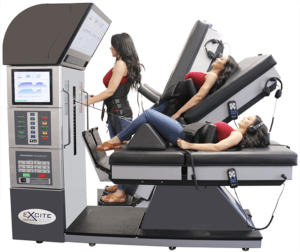
Patient receiving DRX9000 spinal decompression therapy for herniated disc, degenerative disc and sciatica. Henderson NV spinal decompression at Disc Centers of America-Henderson.

Patient receiving DRX9000 spinal decompression therapy for herniated disc and sciatica at Disc Centers of America-Henderson in Nevada
Every disc injury is different.
MRI findings allow our doctors to customize spinal decompression by determining:
• Which disc levels require treatment
• The severity of disc damage
• The direction of disc bulging
• The amount of decompression force required
This allows us to create a precise treatment protocol using spinal decompression technology.
The goal is to reduce pressure within the disc and allow the body to begin a process we call disc rejuvenation.
The Role of MRI in the Swolensky Method of Disc Rejuvenation™
The Swolensky Method of Disc Rejuvenation™ is a comprehensive, physician-directed system designed to treat spinal disc injuries without surgery.
MRI imaging plays a foundational role in this process because it allows us to:
-
Identify the true source of pain
-
Determine candidacy for decompression
-
Design a personalized treatment plan
-
Monitor disc health over time
By combining advanced imaging with spinal decompression, we are able to deliver a highly targeted non-surgical approach to disc care.
Symptoms That Often Require MRI Evaluation
If you are experiencing any of the following symptoms, an MRI may be necessary before beginning treatment:
-
Chronic lower back pain
-
Sciatica or leg pain
-
Numbness or tingling in the legs
-
Herniated disc symptoms
-
Degenerative disc disease
-
Pain that worsens with sitting or bending
These symptoms often originate from disc pressure on spinal nerves, which can only be clearly visualized using MRI imaging.
When MRI-Guided Spinal Decompression May Help
Patients who may benefit from decompression therapy often have:
• Herniated discs
• Bulging discs
• Degenerative disc disease
• Sciatica
• Failed back surgery syndrome
With the correct diagnosis, non-surgical spinal decompression may help reduce pressure on the disc and surrounding nerves.
Schedule a Consultation at Disc Centers of America – Henderson
If you are suffering from chronic back pain, sciatica, or disc problems, our team can help determine whether non-surgical spinal decompression may be appropriate for your condition.
At Disc Centers of America – Henderson, we take a diagnostic-first approach to spinal care.
An MRI allows us to design the safest and most effective treatment plan possible.
Learn more about the Swolensky Method of Disc Rejuvenation™
Visit:
https://drswolensky.com
Spinal Decompression Therapy Explained: A Physician’s Guide to Disc Rejuvenation
Author Bio
Dr. Darrell C. Swolensky, D.C. is the clinical director of Disc Centers of America – Henderson and developer of the Swolensky Method of Disc Rejuvenation™, a non-surgical approach designed to treat disc injuries and chronic spinal conditions using advanced spinal decompression technology.